When Can Babies Sit in a High Chair? Signs of Readiness and Safety Tips
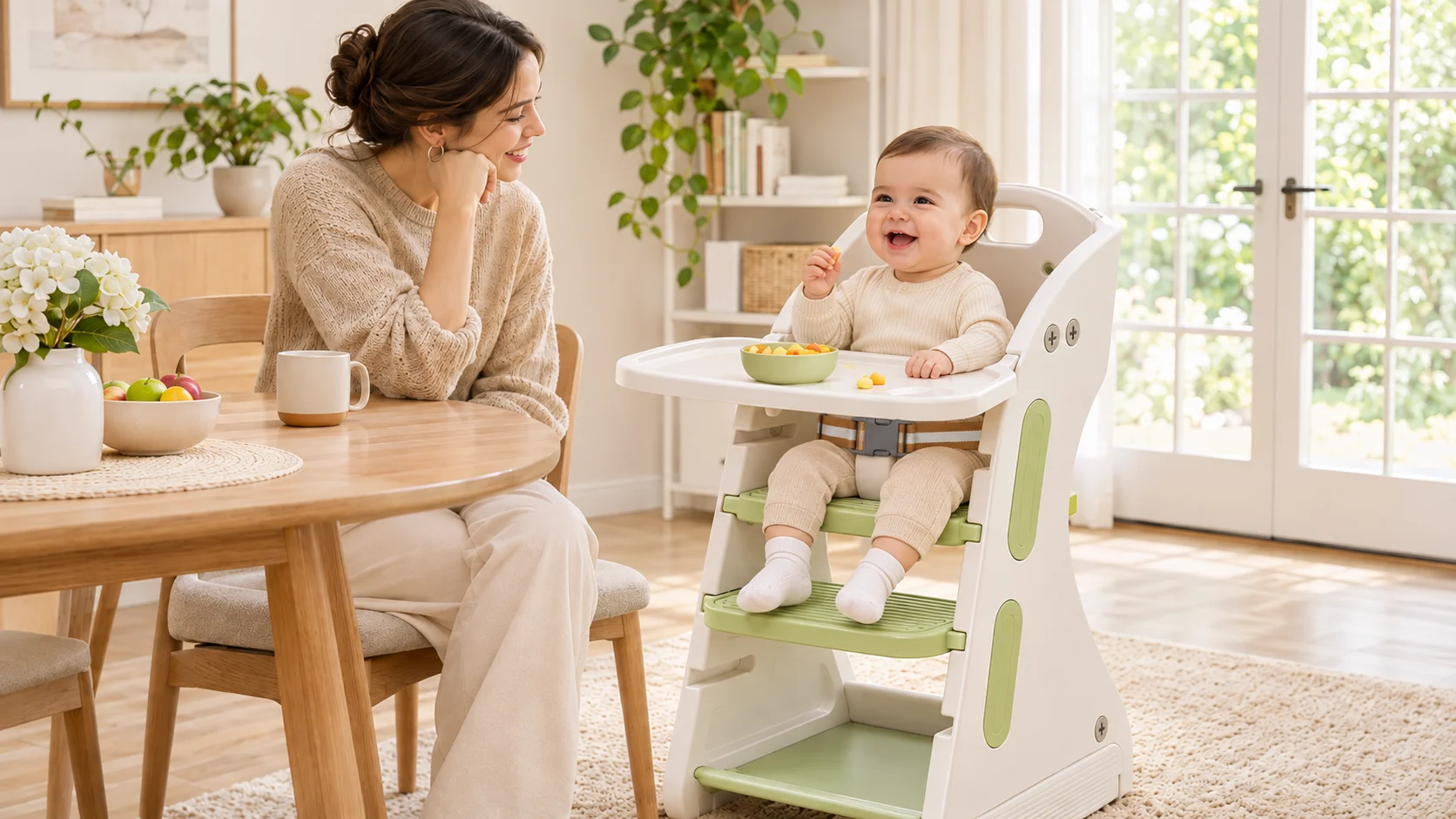
By SUNORAWhen can babies sit in a high chair? Many babies begin using one for meals around 6 months, when they can hold their head steady and sit upright with the support their chair provides. Before that first meal, check two things separately: whether your baby is ready for solid foods and whether the manufacturer’s instructions allow your baby to use that particular seat.
1. At What Age Can Babies Sit in a High Chair?
Around 6 months is a useful time to look for feeding readiness. The CDC recommends introducing solid foods around this age and advises against starting before 4 months. Babies reach feeding milestones at different times. The American Academy of Pediatrics (AAP) suggests watching how well your baby holds their head up in a feeding seat. CDC guidance on starting solids · AAP feeding readiness guide
Pull out the manual for your exact model, especially if the chair converts from one stage to another. Find the instructions for upright feeding and check the age, weight, and sitting requirements for that configuration. If the manual calls for independent sitting, wait until your baby can do that, even if they already reach eagerly for your spoon.
2. Five Signs Your Baby May Be Ready for a High Chair
The following five observations come from the CDC’s developmental signs for starting solids. The first two tell you about posture. The others tell you about your baby’s emerging interest in food and ability to handle it. CDC developmental readiness signs
- A steady head. While seated upright, your baby can hold their head up and look toward you without needing your hand behind their neck.
- An upright sitting position. Your baby can stay upright on their own or with support. Observe whether your baby can maintain good head control and an upright position in the exact chair configuration allowed by the manufacturer's instructions. Do not remove needed support to test this.
- An open mouth when food approaches. Your baby sees the spoon coming and opens up. If they turn away or close their lips, give them a break.
- Food moves back for a swallow. During early meals, look for your baby to move a small amount of food back and swallow. A messy chin is common while they learn.
- Objects make their way to the mouth. You might notice this when your baby picks up a familiar teether and guides it to their lips. You may also see them reach for a smaller object, such as the handle of a teether, and try to close their fingers around it.
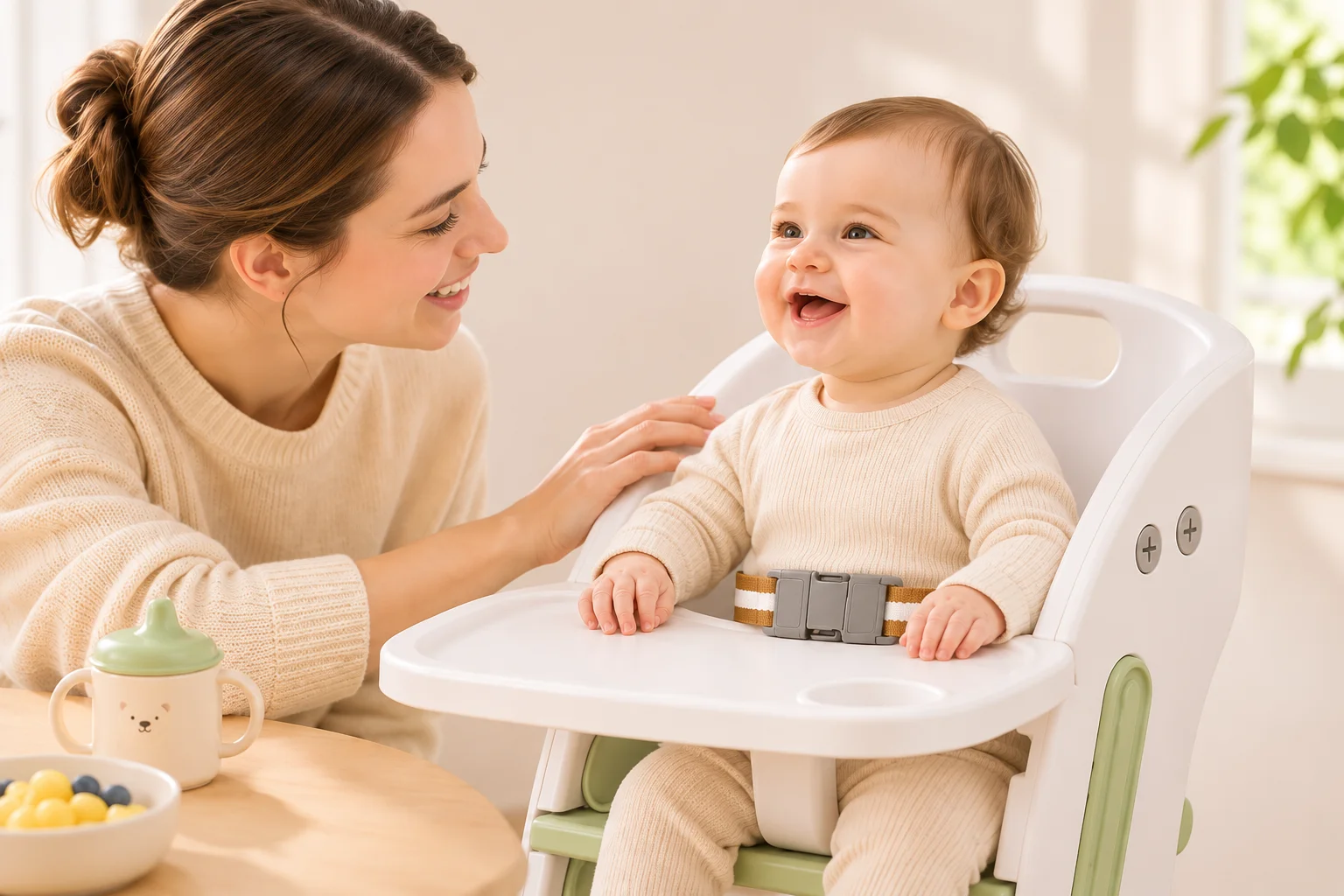
You can observe most of these signs during ordinary play and family meals. Swallowing food is something you observe once feeding begins. There’s no need to offer a spoonful just to decide whether the chair fits.
3. Does a Baby Need to Sit Independently Before Using a High Chair?
For feeding readiness, the CDC includes sitting with support. A baby sitting independently can keep their trunk upright without someone or something holding it in place. A supported sitter may need the seat back to steady their trunk while still holding their own head up. The AAP emphasizes head control in the seat you use for feeding. CDC sitting guidance · AAP guidance on head control
Look at your baby from the side before offering a bite. A brief lean toward the spoon is different from staying folded forward. If their chin keeps dropping toward their chest or their hips repeatedly slide forward, pause the meal and lift them out. Check the seat setup. If you’re unsure whether your baby can maintain an upright feeding position, ask your pediatrician.
4. Important High Chair Safety Tips for Parents
- Set up on a level floor. Before seating your baby, check that the base sits evenly and that folding joints and height adjustments have locked as directed in the manual.
- Buckle up every time. Fasten the chair’s safety harness and adjust it snugly according to the instructions. A latched tray can hold a bowl, but it cannot take the place of the restraints.
- Stay close and watch. Set out the bib, spoon, and washcloth before you seat your baby. If you need to leave the room, take your baby with you.
- Lift your child in and out. Keep children from climbing the frame or standing on the seat. If a buckle or lock stops working, stop using the chair and contact the manufacturer.
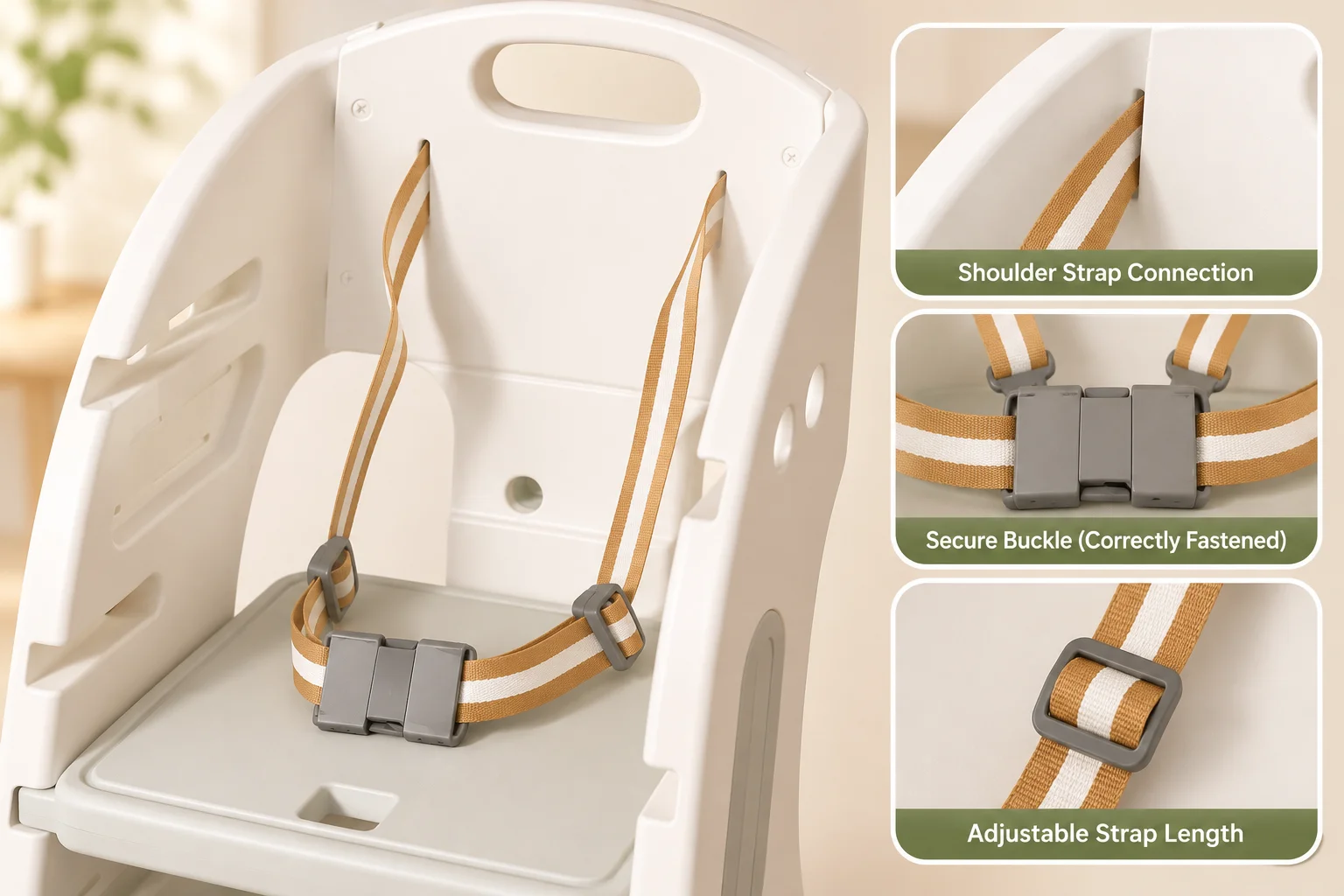
These routines address the falls and tip-overs described in the CPSC’s high chair safety guidance.
5. What Should Parents Look for When Choosing a High Chair?
Start with fit. Read the model’s age and weight limits, examine the base for stability, and check how the restraints fasten and adjust. If you’re considering a secondhand chair, use the model number on its label to locate the correct manual and identify any missing parts.
Then picture a typical dinner. Does the adjustable seat height put your child at a comfortable level for the person feeding them? Can you remove the tray for washing and reach the seams where food collects? A high chair footrest gives little feet a place to rest. If it adjusts, check whether your child’s feet can reach it at the seat setting you plan to use.
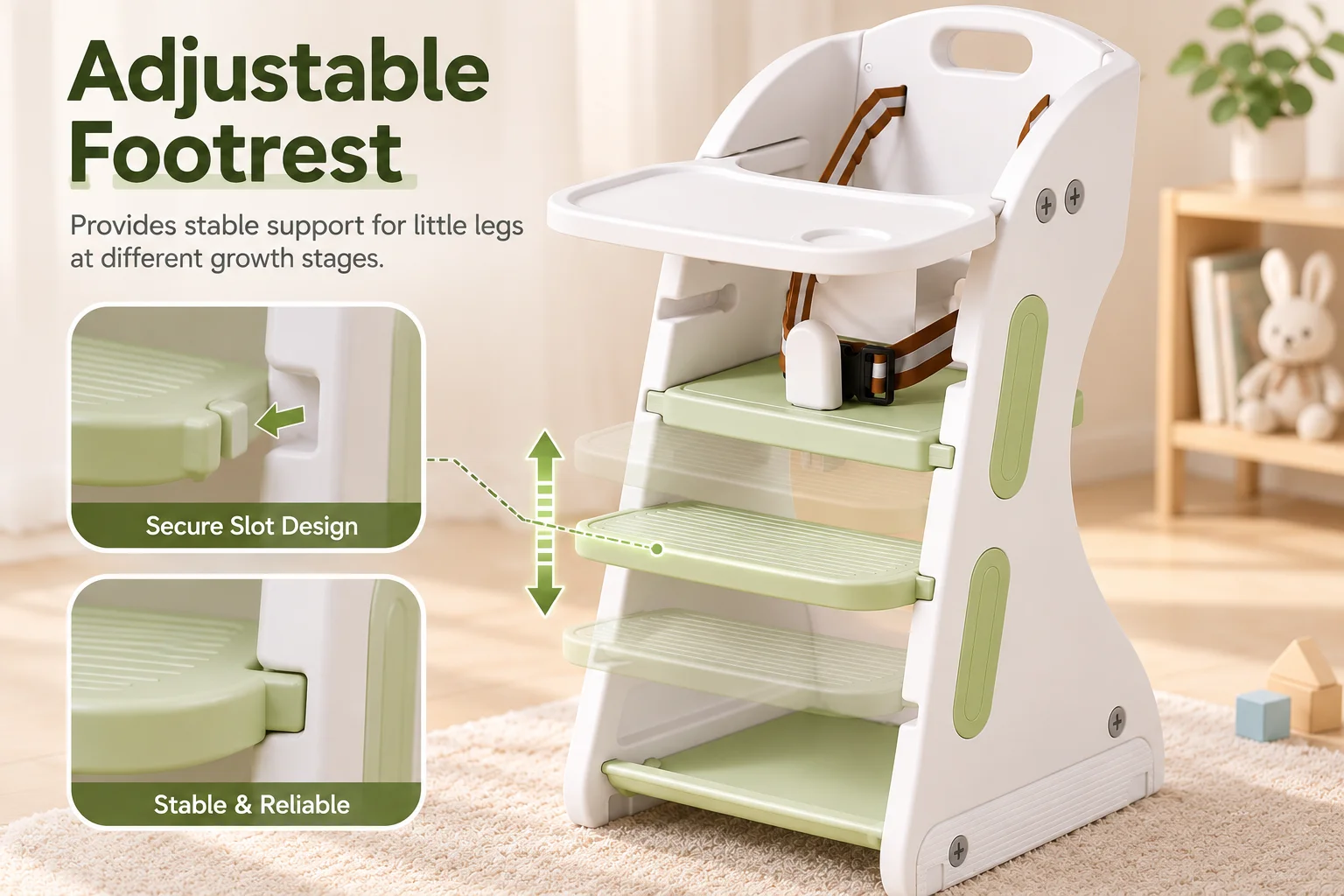
For an example of how the two adjustments work together, SUNORA’s adjustable toddler dining chair has an adjustable seat board and footrest. For infant use, verify the intended age, restraints, and limits for the exact model with the manufacturer first.
For a high chair sold in the United States, ask the manufacturer for safety documentation specific to that model. The federal high chair rule, 16 CFR Part 1231, incorporates ASTM F404. The CPSC identifies where to find the applicable version and any modifications in its high chair FAQ.
6. Frequently Asked Questions
Can a 4-month-old baby sit in a high chair?
Check the model’s instructions and your baby’s head and trunk control. Turning 4 months is neither permission to use a particular seat nor a reason to start solids that day. Around 6 months is the usual feeding milestone. CDC guidance on timing
Does a baby need to sit independently before starting solid foods?
An upright, supported sitter may be ready if they have steady head control and show other feeding skills. If your chosen chair requires unaided sitting, that requirement still applies. CDC readiness signs · AAP feeding guidance
Is a footrest necessary on a high chair?
A footrest is a useful fit feature, especially as a child grows. Foot contact is not among the CDC’s signs for starting solids. If your chair comes with a footrest, install and adjust it as directed. CDC readiness signs
What should I do if my baby keeps slumping in a high chair?
Stop feeding and take your baby out. Check the manual’s sitting requirements, seat position, and strap adjustments. If slumping continues with the chair set up correctly, ask your pediatrician about your baby’s posture before trying another meal in that seat.
Conclusion
Around 6 months, watch what your baby can do at the table. Steady head control and an upright position with appropriate support matter more than a date on the calendar. Choose a chair whose instructions fit your baby’s current abilities, buckle the harness for every meal, and stay close enough to watch each bite.
Sources & Further Reading
- Centers for Disease Control and Prevention. When, What, and How to Introduce Solid Foods. https://www.cdc.gov/infant-toddler-nutrition/foods-and-drinks/when-what-and-how-to-introduce-solid-foods.html
- American Academy of Pediatrics (HealthyChildren.org). When Can Babies Start Solid Foods? Readiness & Feeding Tips. https://www.healthychildren.org/English/ages-stages/baby/feeding-nutrition/Pages/Starting-Solid-Foods.aspx
- U.S. Consumer Product Safety Commission. New Federal Standard to Improve Safety of High Chairs Takes Effect. https://www.cpsc.gov/Newsroom/News-Releases/2019/New-Federal-Standard-to-Improve-Safety-of-High-Chairs-Takes-Effect
- U.S. Consumer Product Safety Commission. High Chairs. https://www.cpsc.gov/FAQ/High-Chairs